
Tesla has received only over 600 orders since its launch in India, the reason being its exorbitant price.
 RobertSep 03, 2025, 11:39 AM
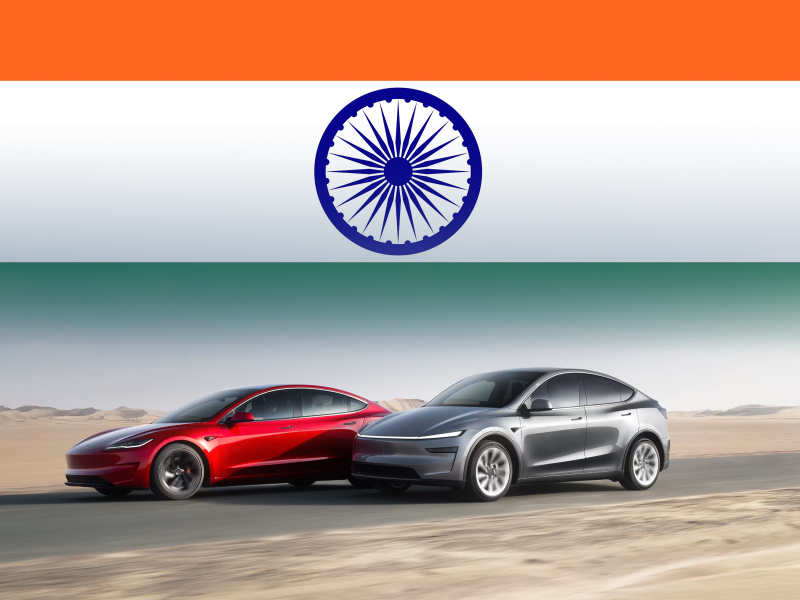
[PCauto] In mid-July 2025, Tesla officially began sales in the Indian market, but so far, the order volume is just over 600 units, far below internal expectations.
Price is the main obstacle to sales growth
The on-road price of Tesla’s entry-level Model Y in India exceeds 6 million rupees (approx. 289,000 MYR), nearly three times higher than the price range of mainstream electric vehicles in India at 2.2 million rupees (approx. 106,000 MYR).
High import duties are the main factor driving up the price. India imposes a 70% base import duty on electric vehicles priced above $40,000 (170,000 MYR), along with an 18% Goods and Services Tax (GST). Combined tax costs account for 35% of the selling price.
There is a significant gap between the purchasing power in India and Tesla’s pricing. India’s per capita GDP is only about 8,461 MYR, and the average monthly salary of a white-collar worker is approximately 1,777 MYR. Purchasing a Model Y would require saving for 15 years without spending on anything else.
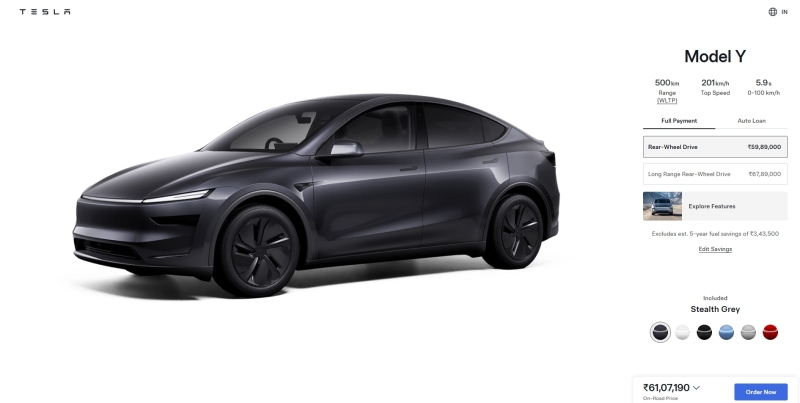
Even among the middle-class population, 6.1 million rupees (294,000 MYR) could either buy a 60-square-meter apartment in New Delhi or 10 locally popular Suzuki Alto cars.
The disparity between purchasing power and product positioning directly limits the size of Tesla’s target customer base.
Tesla’s import-based approach in India drives up prices
Tesla chose to enter India through an import model, avoiding the initial heavy investment of building factories but resulting in a lack of price competitiveness. Additionally, Tesla cannot benefit from the Indian government’s "market exchange for technology" policy, which offers tariff reductions if automakers commit to investing $500 million in factories and achieving a 50% localization rate within three years.
According to reports, Tesla plans to ship 350-500 cars to India in 2025, with initial deliveries limited to the four cities of Mumbai, Delhi, Pune, and Gurugram, where physical showrooms are established.
However, achieving this target already faces challenges, as the annual sales of the high-end electric vehicle segment in India are less than 3,000 units (data from the first half of 2025).
Poor infrastructure in India further restricts the market demand for electric vehicles
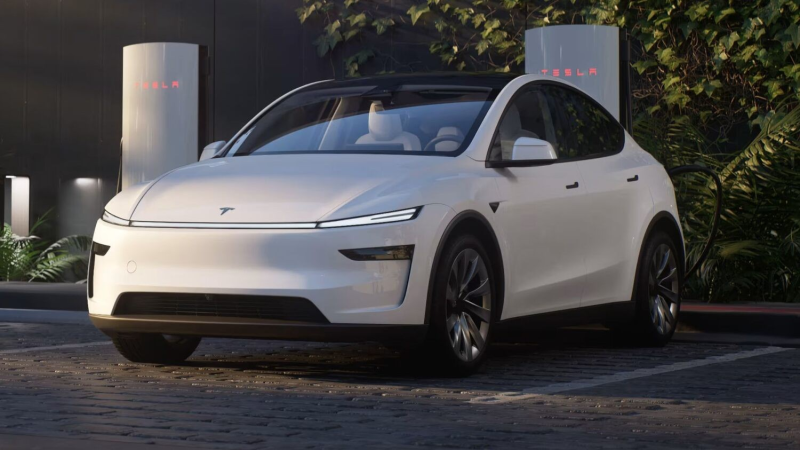
From the perspective of charging facilities, the scarcity of electric vehicle charging stations in India is also a significant factor limiting EV sales.
70% of public chargers are concentrated in first-tier cities like Mumbai and Delhi, with charging wait times often reaching two hours. Complicated road conditions (such as potholes and stray animals) and traffic order issues pose practical usage challenges, even in major cities.
In addition, the penetration rate of electric vehicles in India remains low; in 2024, EVs accounted for only about 4% of total car sales, and the market still requires significant education over time.
Tesla still cannot escape the competition from Chinese car brands in India
Chinese brand BYD has performed remarkably in the Indian market, with sales exceeding 1,200 units (Sealion 7 model) in the first half of 2025, with a starting price of approximately 4.9 million rupees (about 236,000 MYR). It expanded into 34 small and medium-sized towns through a "horizontal sales strategy" and avoided policy risks through a local joint venture with MEIL.
India's local brand Tata Motors dominates more than 53% of the electric vehicle market, with affordable models like the Nexon EV priced at approximately 61,364 MYR, along with government subsidies.
If Tesla wants to break through, it needs to compete with BMW and Mercedes-Benz in the high-end market or shift to a price-cutting strategy, but the latter might sacrifice profit margins.
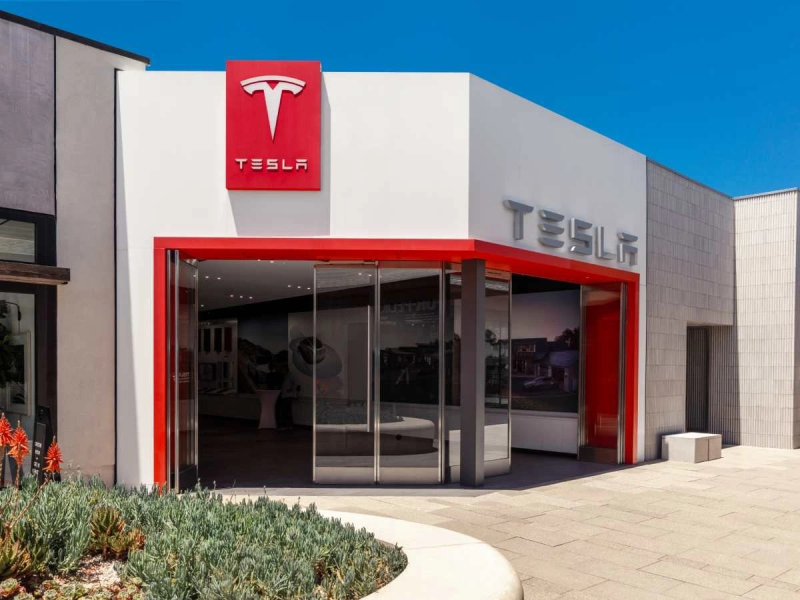
Why is Tesla determined to enter the Indian market?
The most direct reason is that Tesla's global sales are declining. Tesla's global sales dropped sharply in the second quarter of this year, with severe declines in major markets such as North America and Europe (over 40% drop in several countries). This has made Tesla eager to enter the Indian market to ease the pressure. However, the Indian market has not successfully saved Tesla's declining global sales, and Tesla's global sales continue to decrease.
If any infringement occurs, please contact us for deletion










Popular Cars
Model Year
Car Compare
Car Photo