
Q
How much is the Mazda CX-9?
 HappyOtterAug 18, 2025, 10:55 AM
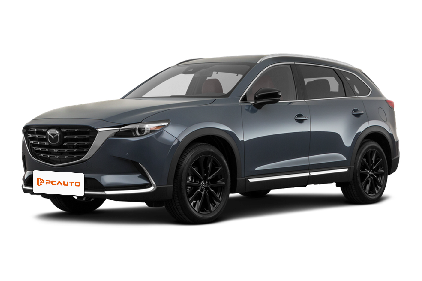
The Mazda CX-9 comes in multiple versions, and the prices vary among different versions. The price of the 2021 Mazda CX-9 Ignite Edition 2WD is RM 328,610, while the 2021 Mazda CX-9 Ignite Edition AWD is priced at RM 336,215. The 2020 Mazda CX-9 2.5 SkyActive-G Turbo 2WD is sold at RM 282,520, and the 2020 Mazda CX-9 2.5 SkyActive-G Turbo 4WD costs RM 336,610. The 2018 Mazda CX-9 2.5 SkyActiv-G Turbo 2WD (MY-spec) is priced at RM 288,610, and the 2018 Mazda CX-9 2.5 SkActiv-G Turbo 4WD (MY-spec) is sold for RM 305,610. There are certain differences in the configurations and other aspects among these different versions of the models, and consumers can make choices according to their needs. For example, if you focus on the four - wheel drive function, you can consider the AWD or 4WD versions; if you're sensitive to price, some older models might be more suitable.
Special Disclaimer: This content is published by users and does not represent the views or position of PCauto.
Related Q&A
Q
Is the CX-9 fast?
The Mazda CX-9 is a large SUV with decent power performance in the Malaysian market. It's equipped with a 2.5-liter turbocharged engine, which outputs 227 horsepower and 420 Nm of torque. Paired with a 6-speed automatic transmission, the power output is smooth and sufficient to meet the needs of daily driving and high-speed overtaking. The 0 - 100 km/h acceleration takes about 8 seconds, which is relatively fast for a 7-seater family SUV. Although the acceleration performance of the CX-9 can't compare with that of performance SUVs, it's above average in its class. Especially, it has strong mid-range acceleration ability, making it suitable for driving on Malaysian highways. It's worth noting that the CX-9 uses Mazda's Skyactiv technology, which balances power and fuel economy. This is a good trade - off for Malaysian consumers. If you're after more powerful performance, you can consider some competitors with V6 engines. However, the CX-9 strikes a great balance between power, space, and fuel consumption, making it particularly suitable for Malaysian family users.
 CobaltCrushAug 18, 2025
Q
How big is a CX-9 gas tank?
The fuel tank capacity of the Mazda CX-9 is 72.5 liters. This design can meet the needs of family long-distance trips, reducing the inconvenience of frequent refueling. For users in Malaysia, such a fuel tank size can provide good cruising range while taking fuel economy into account, which is especially practical when traveling across states or on self-driving tours. As a mid-to large-sized SUV, the CX-9 is equipped with an efficient power system. The fuel tank volume matches the fuel consumption performance of its 2.5-liter turbocharged engine, ensuring a reasonable driving range under comprehensive road conditions.
In addition, it is recommended that car owners regularly check the condition of the fuel tank and the oil circuit system and maintain good driving habits, such as smooth acceleration and reasonable use of cruise control, to further improve fuel efficiency. At the same time, pay attention to avoid exposing the fuel tank to the sun for a long time in Malaysia's hot climate, so as not to affect fuel evaporation and system safety.
 FlareBurstAug 18, 2025
Q
How many km per liter is a Mazda CX-9?
According to official data, the fuel economy of the Mazda CX 9 is roughly between 10 and 12 kilometers per liter of gasoline. The exact figure depends on driving conditions, road conditions, and vehicle configuration. For instance, the fuel consumption of the 2.5-liter turbocharged engine paired with a four-wheel-drive system is slightly higher than that of the front-wheel-drive version. In Malaysia, heavy traffic in the city may lead to higher fuel consumption, while driving on the highway can get closer to the ideal figure. Mazda's Skyactiv technology enhances fuel economy by optimizing engine efficiency and lightening the vehicle body, while maintaining power output. For consumers who are concerned about fuel consumption, it is recommended to regularly maintain tire pressure and engine condition and avoid aggressive driving. These habits can significantly affect the actual fuel-consumption performance. When compared with other SUVs in the same class, the CX-9's fuel consumption is at a medium level, but its handling and interior quality are still outstanding advantages, making it suitable for family users who pursue a great driving experience.
 HypnoticGlowAug 18, 2025
Q
How many kilometers can a Mazda CX-9 do?
As a mid-large SUV, the durability and mileage performance of the Mazda CX-9 mainly depend on daily maintenance and driving habits. Under normal use and regular maintenance, the CX-9 can reach a mileage of 200,000 to 300,000 kilometers or even more. Many owners have reported that the vehicle can maintain stable performance in the long run with good maintenance.
For users in Malaysia, the hot and humid climate may have a certain impact on vehicle components such as rubber seals and batteries. It is recommended to regularly check the cooling system and air-conditioning system, and replace the engine oil and filters according to the manufacturer's recommended maintenance schedule to extend the engine life.
The Skyactiv-G turbocharged engine equipped in the CX-9 has mature technology, and it performs well in terms of fuel economy and reliability, making it suitable for long-distance family trips. In addition, the rainy weather in Malaysia places certain requirements on the braking system and chassis anti-rust. It is recommended to regularly clean the chassis and check the thickness of the brake pads.
If you want to learn more about specific maintenance details, you can refer to the maintenance manual provided by Mazda Malaysia official or consult the authorized service center.
 OmegaStrikeAug 18, 2025
Q
What is the fuel consumption per 100km of the Mazda CX-9?
According to official data, the combined fuel consumption of the Mazda CX-9 in the Malaysian market is approximately 8.5 to 9.5 liters per 100 kilometers. The specific figure depends on driving habits, road conditions, and vehicle configuration. For example, the 2.5-liter turbocharged engine equipped in the vehicle has better fuel-consumption performance during high-speed cruising, while it will be slightly higher in congested urban areas. Malaysian car owners can refer to this data as a benchmark for their daily driving. At the same time, it is recommended to carry out regular vehicle maintenance, such as keeping the tire pressure normal and using the appropriate engine oil. These details can all help to optimize fuel economy.
In addition, Mazda's Skyactiv technology, with its efficient power system and lightweight design, provides ample power while also taking fuel-consumption performance into account. It is suitable for family users who value both the driving experience and practicality. If you have higher requirements for fuel consumption, you can also consider hybrid or pure-electric models. However, as a seven-seat SUV, the CX-9's fuel-consumption level is still competitive in its class.
 VelvetNightAug 18, 2025
Q
How long will a Mazda CX-9 last?
As a mid-large SUV designed mainly for family use, the Mazda CX-9 typically shows a durability of 150,000 to 200,000 kilometers or even more in the Malaysian market. The actual lifespan depends on the owner's maintenance habits and driving environment. Regularly changing engine oil, transmission fluid, maintaining the braking system and following the manufacturer's recommended maintenance schedule are the key factors. The hot and humid climate in Malaysia may have a certain impact on rubber components and electronic systems. It is recommended that car owners pay special attention to the inspection of the air-conditioning system and chassis parts.
The 2.5T turbocharged engine equipped in the CX-9 has mature technology and is paired with a 6-speed automatic transmission. The reliability of the powertrain has been verified by the market. However, for turbocharged models, more attention should be paid to the maintenance of the cooling system and intake system. When using this kind of large SUV in Malaysia, car owners also need to regularly clean the radiator to prevent overheating problems in the tropical climate, and choose regular gas stations to ensure fuel quality. If properly maintained, the CX-9 can fully meet the needs of Malaysian families for more than 10 years. Its relatively high resale value also reflects the market's recognition of its durability.
 GammaRayAug 18, 2025
Q
What is the death rate of a Mazda CX-9?
Regarding the mortality data of the Mazda CX-9, the Malaysian official has not released the statistics on the traffic accident mortality rate of specific vehicle models. However, according to reports from multiple global safety evaluation institutions, the Mazda CX-9 performs excellently in terms of safety performance. For example, it has won the highest rating of "Top Safety Pick+" multiple times in the crash tests of the Insurance Institute for Highway Safety (IIHS) in the United States. This is due to its high-rigidity body structure, a well-developed airbag system, and advanced active safety technologies such as intelligent brake assist and lane-keeping assist.
For Malaysian consumers, when choosing an SUV, besides paying attention to safety ratings, they also need to consider local road conditions and driving habits. For instance, the G-Vectoring Control technology equipped in the CX-9 can improve handling stability on slippery roads. Regular maintenance and proper use of safety features (such as child seat interfaces) can further reduce risks.
It's worth noting that the mortality rate of any vehicle is closely related to factors such as driving behavior and road environment. Therefore, safety driving awareness and compliance with traffic rules are of crucial importance.
 DiamondDustAug 18, 2025
Q
Is CX-9 fuel efficient?
As a mid - large SUV, the Mazda CX-9 has above-average fuel efficiency among vehicles in the same class. The 2.5-liter turbocharged engine it's equipped with, combined with Skyactiv technology, not only provides sufficient power but also achieves relatively reasonable fuel consumption through optimized combustion efficiency and gearbox tuning. According to actual driving conditions, the combined fuel consumption is approximately 10 to 12 liters per 100 kilometers. For Malaysian users, although the fuel consumption of the CX-9 may be slightly higher than that of compact SUVs, considering its spacious interior and strong power output, such performance is still acceptable. If you focus more on fuel economy, you can consider hybrid models or diesel versions. However, the balance between performance and practicality of the CX-9 is still worth considering. Especially during family trips or long-distance drives, its comfort and safety can also offer a great experience.
 GoldieAug 18, 2025
Q
Do Mazda CX-9 hold their value?
The Mazda CX - 9's performance in terms of value retention in the Malaysian used-car market is above average. Its resale value is influenced by the brand's reputation, the vehicle's model positioning, and market demand. As an imported seven-seat SUV, the CX-9 has gained stable recognition among local middle-and high-end family users thanks to its KODO design language, SKYACTIV technology, and luxurious interior configuration. In particular, the post-2017 facelifted models are more popular as they have upgraded safety features like the i-ACTIVSENSE system.
However, its resale value is slightly lower than that of non-luxury brand hardcore SUVs such as the Toyota Fortuner. This is mainly because the latter has a larger market presence in Southeast Asia and lower maintenance costs. Nevertheless, the CX-9 can still maintain a relatively stable used-car price due to its more refined design and driving experience. Typically, a three-year-old CX-9 can retain about 60-65% of its original value.
It's worth noting that Malaysian consumers generally pay close attention to the maintenance records and original warranty status when purchasing a used CX-9. It is recommended to give priority to vehicles serviced at Mazda-authorized dealerships to safeguard their subsequent resale value. At the same time, one should be aware of the longer supply cycle of imported car parts. Regular maintenance and complete repair records can significantly increase the premium of a used car.
 WalkerzzAug 18, 2025
Q
Which country made Mazda CX-9?
The Mazda CX-9 is an SUV model designed and produced by the Japanese automaker Mazda. It is mainly targeted at the global market, including Malaysia. This vehicle is manufactured at Mazda's factory in Hiroshima, Japan, and it adopts the brand's latest KODO design language and Skyactiv technology, emphasizing the combination of a dynamic exterior and efficient power performance.
The CX-9 is quite popular in the Malaysian market. Thanks to its spacious three - row seat layout and luxurious interior configuration, it is suitable for family users. As a Japanese brand, Mazda has always focused on the driving experience and fuel economy. The 2.5-liter turbocharged engine equipped in the CX-9 not only provides ample power but also takes environmental protection performance into account.
For Malaysian consumers, the CX-9 is an imported SUV that combines practicality and brand reputation. Its Japanese manufacturing background also adds a guarantee of quality. Meanwhile, Mazda has a relatively complete dealer network and after-sales service system in Malaysia, which makes it convenient for car owners to carry out maintenance.
 PeachBlossomDelightAug 18, 2025
Popular Cars
Model Year
Car Compare
Car Photo
Related Models
 Cars
CarsLatest Q&A
Q
Does every car need fog lights?
Not all vehicles are required to be equipped with fog lights, but rear fog lights are mandatory by law, while front fog lights depend on the vehicle's configuration. Fog lights are primarily used in low-visibility conditions. Front fog lights employ yellow light to enhance penetration, while rear fog lights are red to alert following vehicles. Regulations explicitly require that fog lights must be activated when visibility falls below 200 meters, accompanied by speed and distance restrictions. For example, when visibility ranges between 100 and 200 meters, the speed should not exceed 60 km/h, and the following distance must be maintained at over 100 meters. Fog lights are typically installed in low positions beneath the bumper, with front fog lights symmetrically arranged on both sides, whereas rear fog lights are usually positioned on the left side or both sides of the vehicle's rear. Note that any modifications to fog lights must comply with national standards, and professional installation is recommended to ensure compliance. Proper use of fog lights can significantly enhance driving safety in rainy or foggy conditions, but they should be avoided during normal visibility to prevent distracting other drivers.
 StarryVoyagerMar 23, 2026
Q
What is an extended range electric vehicle?
Range-extended electric vehicles (REVs) are a type of hybrid vehicle that combines pure electric drive with a fuel-powered generation system. Their core feature is that the on-board fuel engine charges the battery pack instead of directly driving the wheels, thereby extending the driving range. These vehicles are usually equipped with smaller-capacity power batteries (e.g., 30-50kWh) and can travel 150-250 kilometers in pure electric mode. When the battery is low, the fuel range extender starts automatically to generate electricity, increasing the combined driving range to over 600 kilometers, which effectively alleviates the range anxiety of pure electric vehicles.
In the Malaysian market, range-extended technology is particularly suitable for suburban areas where charging infrastructure is still underdeveloped or for long-distance travel scenarios. For example, the models jointly developed by Proton and Geely adopt a similar design. Compared with plug-in hybrid electric vehicles (PHEVs), range-extended electric vehicles are always driven by electric motors, providing a smoother driving experience closer to that of pure electric vehicles. In contrast to battery electric vehicles (BEVs), their refueling method better aligns with the current dense network of fuel stations in the region.
Currently, the Malaysian government offers incentives such as road tax and registration tax exemptions for such new energy vehicles, but it should be noted that some range-extended models may not qualify for full subsidies due to the presence of fuel-powered generation units. With the expansion of charging networks and technological advancements, range-extended electric vehicles may become a transitional solution that balances practicality and environmental requirements.
 SunshineDayMar 23, 2026
Q
What is an EV range extender?
The Electric Vehicle Range Extender (EV Range Extender) is an auxiliary power system primarily used to extend the driving range of pure electric vehicles. Its core principle is to automatically start and charge the battery when the battery power is insufficient through a built-in small fuel generator or fuel cell, thereby preventing the vehicle from being stranded due to power depletion.
Currently, common types of range extenders on the market include internal combustion engine (ICE) type and fuel cell type. The former is powered by gasoline or diesel generators, while the latter uses hydrogen fuel cell technology. Both can operate quietly and are compatible with the 48V to 72V voltage systems of electric vehicles. For example, portable, installation-free range extenders range in price from RM300 to RM2900, with power covering 3kW to 8kW, which can meet the range needs of two-wheeled, three-wheeled and even four-wheeled electric vehicles. Some products also feature intelligent frequency conversion and low-noise design.
The popularity of range extenders is closely related to the government's promotion of electric vehicle policies and consumers' concerns about range anxiety. However, its technical difficulties lie in how to balance volume, weight and power generation efficiency, while complying with emission standards. In the future, as the cost of fuel cell technology decreases, the application of range extenders in the commercial vehicle field may further expand.
 TwilightMysteryMar 23, 2026
Q
What is EREV vs EV?
The core difference between EREV (Extended-Range Electric Vehicle) and EV (Battery Electric Vehicle) lies in their power architecture and energy replenishment logic. EREV incorporates a fuel-powered range extender on top of a pure electric system; the engine serves solely as a generator to charge the battery and does not directly drive the wheels. Thus, the vehicle is always powered by an electric motor, achieving a combined range of 800-1,200 kilometers, which makes it suitable for long-distance travel or users with limited charging access. However, the secondary energy conversion may result in increased fuel consumption during high-speed operation. EVs rely entirely on battery power, featuring a simpler structure with energy conversion efficiency exceeding 90%, zero emissions, and lower maintenance costs. However, their range is constrained by battery capacity (typically 500-700 kilometers), depends on charging infrastructure, and exhibits more pronounced range reduction in low-temperature conditions. Regarding purchase cost, EREVs are generally over 10% more expensive than comparable EVs due to the additional engine system, though EVs may qualify for higher subsidies. For daily commuting with convenient charging access, EVs are more economical and eco-friendly. For frequent long-distance travel or range-anxious users, EREVs offer greater flexibility through refueling. Both technologies have distinct application scenarios, and the choice should be based on individual travel patterns, charging availability, and budget considerations.
 DreamyHorizonMar 23, 2026
Q
What are the advantages of EREV?
Extended-Range Electric Vehicles (EREVs) combine the dual advantages of pure electric drive and fuel-powered generation. Their core feature lies in using the internal combustion engine as a generator to continuously supply power to the battery pack rather than directly driving the vehicle, thereby retaining the smooth and quiet driving experience of electric vehicles while significantly alleviating range anxiety. Taking a certain EREV model equipped with a 1.5-liter fuel engine as an example: its 39.05 kWh lithium iron phosphate battery delivers a pure electric range of 225 kilometers, and when combined with the fuel range-extender system, the total range extends to 1,065 kilometers—far surpassing most pure electric models.
In terms of charging efficiency, EREVs require only 15 minutes to fast-charge from 30% to 80%, making them ideal for long-distance travel or areas with limited charging infrastructure.
Moreover, EREV technology holds particular suitability for the Malaysian market. On one hand, the government has extended electric vehicle tariff exemptions until 2025 and is advancing charging infrastructure development (with a target of 10,000 charging stations by 2030), reducing adoption barriers. On the other hand, local consumers exhibit strong demand for SUVs and hybrid models (hybrid and pure electric vehicle sales are projected to grow by 52% in 2025). EREVs not only fulfill family users' dual requirements for space and range but also circumvent the limitations of pure electric vehicles during the current phase of underdeveloped charging networks.
From an industrial standpoint, Malaysia is accelerating its electrification transition. Domestic brands like Perodua have already introduced electric models, while the entry of Chinese automakers' EREV technology will further diversify market options, creating a differentiated competitive landscape alongside traditional fuel vehicles and pure electric cars.
 JoyfulMelodyMar 23, 2026
Related News

Spend 100,000 more to buy Mazda CX-80, or buy CX-8?
Kevin WongMar 12, 2026

The next-generation Mazda CX-5 details emerge: Brand new Skyactiv-Z engine, Independently developed hybrid system
MichaelMar 12, 2026

Mazda 3 Hatchback vs. Honda City Hatchback, which one should I choose?
JohnMar 9, 2026

2026 Mazda 3 Liftback Latest Pricing: On-the-Road Cost, Monthly Instalments and 1.5L vs 2.0L Differences
AshleyFeb 27, 2026

Mazda CX-5 cumulative sales reach 5 million, the next generation will use hybrid power
WilliamJan 30, 2026
View More
Pros
Cons