
Perodua eMO Concept Sparks Unofficial Rendering
 LienMay 14, 2025, 12:27 PM
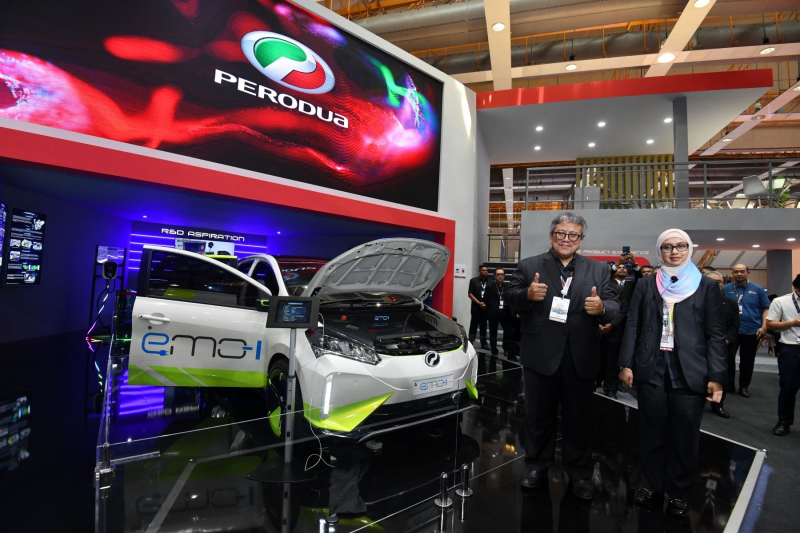
【PCauto】The launch of Perodua's first electric vehicle has been long delayed, and many consumers are becoming impatient—especially since Proton's e.MAS 7 has already been on sale for months. Yet, at the 2025 Malaysia Auto Show, Perodua's eMO still remains in the stage of concept car.
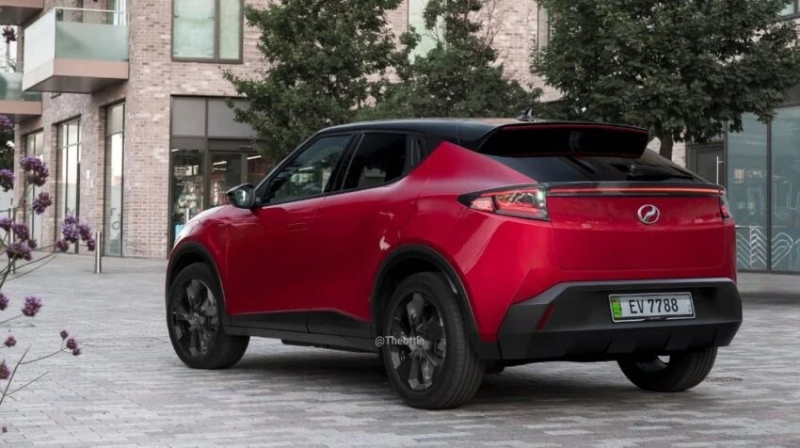
However, over the past two years, the design of the eMO concept has gradually taken shape. Local designer Theophilus Chin created unofficial renderings of a expected production model based on the EM-O EV, naming it the "MyEV"—a vision of the next-generation electric Myvi.
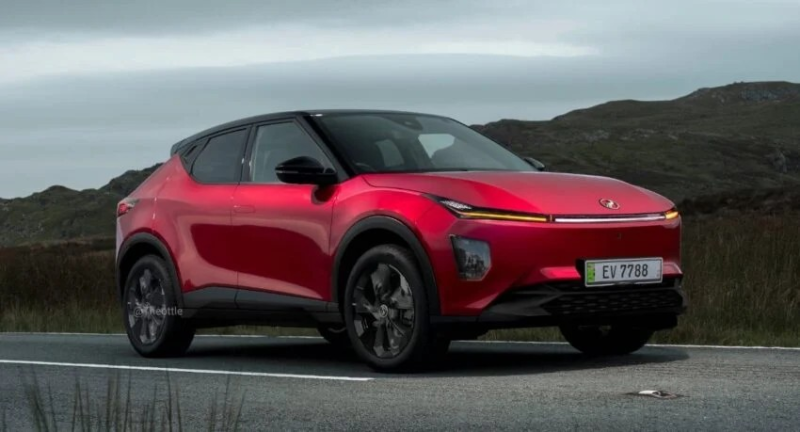
Drawing from the features of near-production prototype seen at the 2025 show, Chin's renderings show a front fascia with a grille-less design, slim LED daytime running lights, and a more conspicuous lower bumper intake, resembling the eMO-II.
The side profile of eMo is large and practical with a sporty fastback roofline, higher than previous hatchbacks. The rear is equipped with sharp triangular LED taillights connected by a light bar, with a sloping rear windshield and roof spoiler for a clean and modern look.
Beyond exterior design, details about the eMO are gradually emerging. Perodua positions it as a compact model in B-segment. Based on the 2023 EM-O concept, it measures 3,895mm in length, 1,735mm in width, and 1,515mm in height, with a 2,500mm wheelbase—similar to the current Myvi but larger than upcoming EVs like the Proton e.MAS 5 and Wuling Bingo.
For range, eMO uses a CATL-supplied LFP battery, targeting a 0–100 km/h acceleration in 6–7 seconds (potentially Perodua's quickest vehicle yet), an approximately top speed of 165 km/h, and a range of 400–410 km.
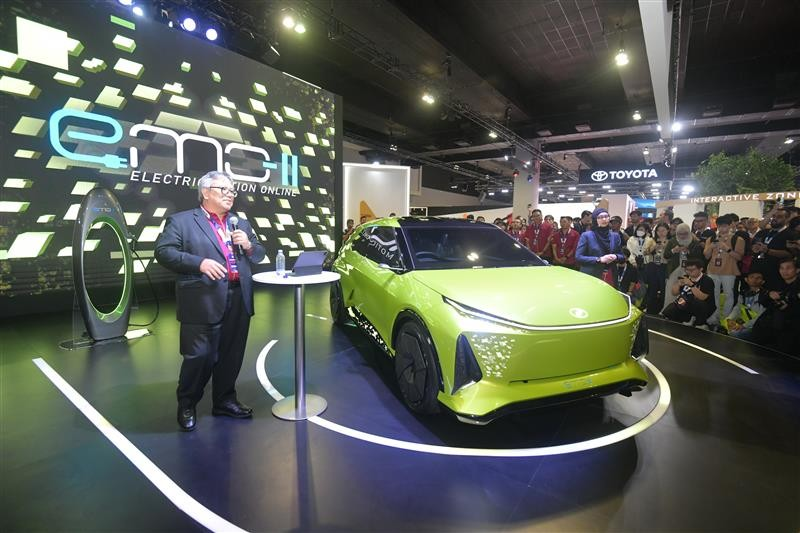
In terms of interior configuration, the near-production model is equipped with a full-size near-production dashboard, a tall central console separating the front seats, soft-touch dashboard surface, digital dashboard, rotary shifter, a 360-degree camera and digital rear-view mirror. In addition, it supports Apple CarPlay and Android Auto, and physical buttons for single-zone automatic operation of air conditioner.
In terms of plans of production and sales, Perodua will begin production in September 2025, with the vehicle expected to be launched in the fourth quarter of 2025. Its initial monthly production target is set at 500 units.
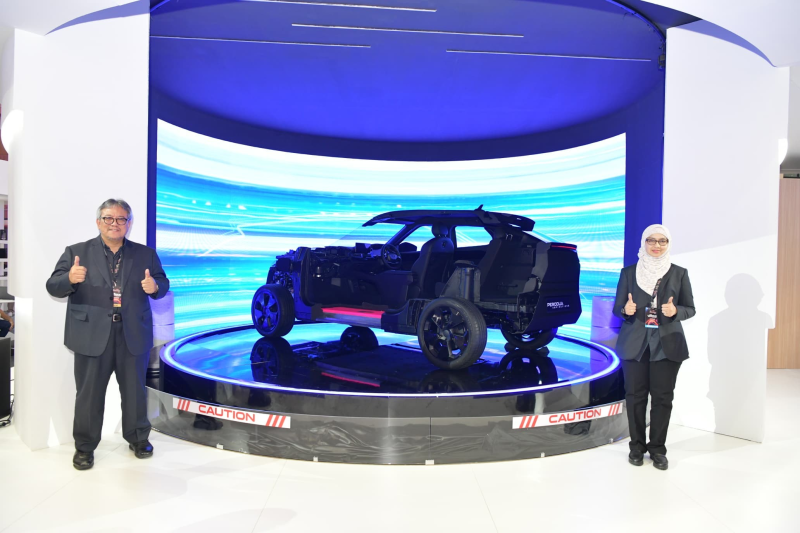
Additionally, the Perodua eMO will adopt a battery leasing model—Malaysia’s first EV battery leasing program—which not only reduces the vehicle's cost but also ensures owners always have a battery in optimal condition.
The Perodua eMO is expected to be priced below RM90,000. While official technical specifications for the eMO-II are not fully disclosed, Perodua must still strike a balance between design fidelity, performance delivery, and cost control. If successful, eMO will become a major competitor in Malaysia’s electric vehicle market.
If any infringement occurs, please contact us for deletion
Trending News

Before buying a Mitsubishi Xpander, you must know these 5 common issues
Although the overall mechanical quality of Mitsubishi Xpander is widely recognized as economical and durable, according to extensive feedback from owners, Xpander may encounter the following 5 problems.

BYD Sealion 7 Common Issues: Must-Read Before Buying
BYD Sealion 7 is a highly mature product, with most of its exposed issues being "minor flaws" in software adaptation and craftsmanship details. With iterations of OTA updates and the accumulation of experience in electronic fault diagnostics within the after-sales service network, these problems are expected to improve in the future.

BYD said that the Japanese government discriminates, giving Toyota, Tesla, and other competitors more subsidies.
With the Japanese government's official implementation of the 2026 "Clean Energy Vehicle Subsidy Program" (CEV Subsidy Program), the subsidy amount received by BYD models has formed a huge gap compared to other local brands. After factoring in subsidies, the originally higher-priced Toyota bZ4X is even cheaper than the BYD Atto 3, causing BYD to lose its pricing advantage in the local market.

Mazda 2 and CX-3 confirmed to be produced in Thailand until 2027, new successor models to be introduced in 2028
At present, we do not need to worry about the supply of spare parts. On the contrary, with the rise in the status of the AAT plant, we may even see minor upgrades in configuration optimization for Mazda 2 and CX-3 over the next two years.

MG releases SolidCore battery and Hybrid+ technology in Europe
MG's SolidCore semi-solid-state battery technology announces mass production, accompanied by a more intelligent and faster-responding Hybrid+ hybrid system. This century-old British brand is attempting to expand its market share in Europe.









Popular Cars
Model Year
Car Compare
Car Photo